
DGC Group · Enterprise capability

Enterprise Capability Engineering

A discipline for building organisational capabilities that last.

Strategies, programmes, systems and organisational structures are means. The capability an organisation needs to create or strengthen is the outcome of bringing those means together coherently.

Enterprise Capability Engineering treats that capability as the primary object of design.

Why capability matters

Delivery is not the same as capability.

An organisation can successfully complete programmes, implement systems, restructure teams and introduce new processes without becoming materially more capable.

Outputs matter, but they are not the same as sustained ability.

Enterprise Capability Engineering focuses on the organisation's ability to achieve an intended outcome repeatedly and under the conditions it actually faces.

What is an enterprise capability?

The ability lives in the integration.

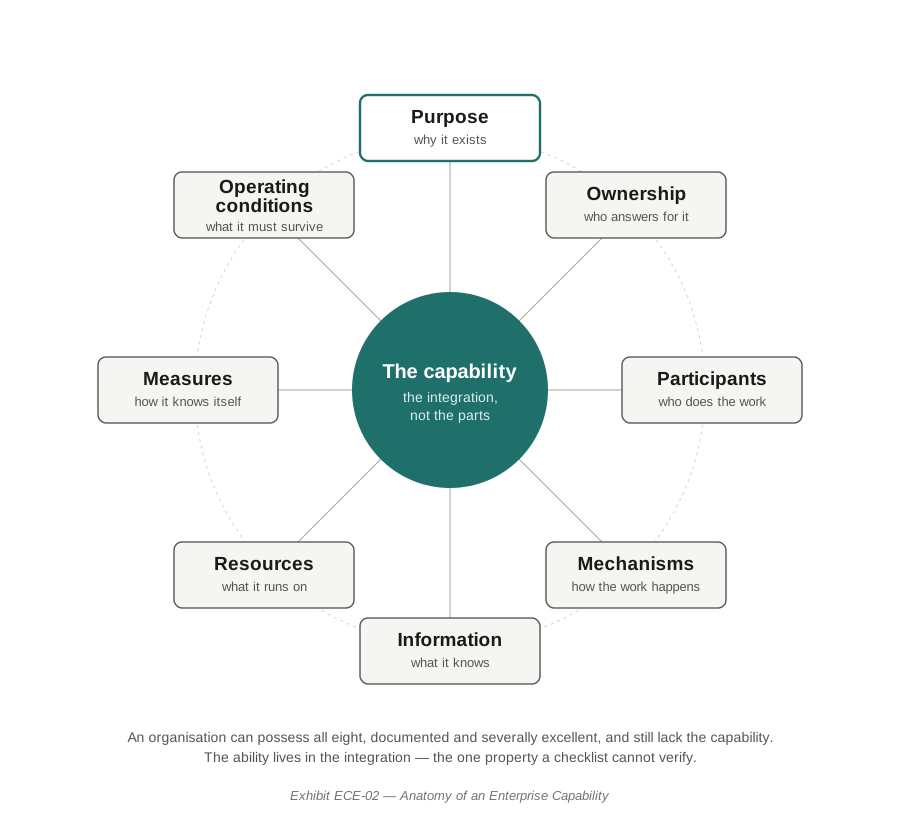
An enterprise capability is the integrated, repeatable ability of an enterprise to achieve an intended outcome under defined operating conditions.

The important word is integrated.

An organisation may possess strong people, sound processes, capable technology, clear governance and useful information and still fail to produce the intended outcome if those elements do not work together as one capability.

It is the integration of purpose, ownership, participants, resources, information, mechanisms, measures and operating conditions around an intended outcome.

Anatomy of an enterprise capability
Purpose, ownership, participants, mechanisms, information, resources, measures and operating conditions work together. The capability lives in their integration. Open full-size diagram

The method

Five movements. One continuous thread.

The five movements and the continuous Advisory Thread
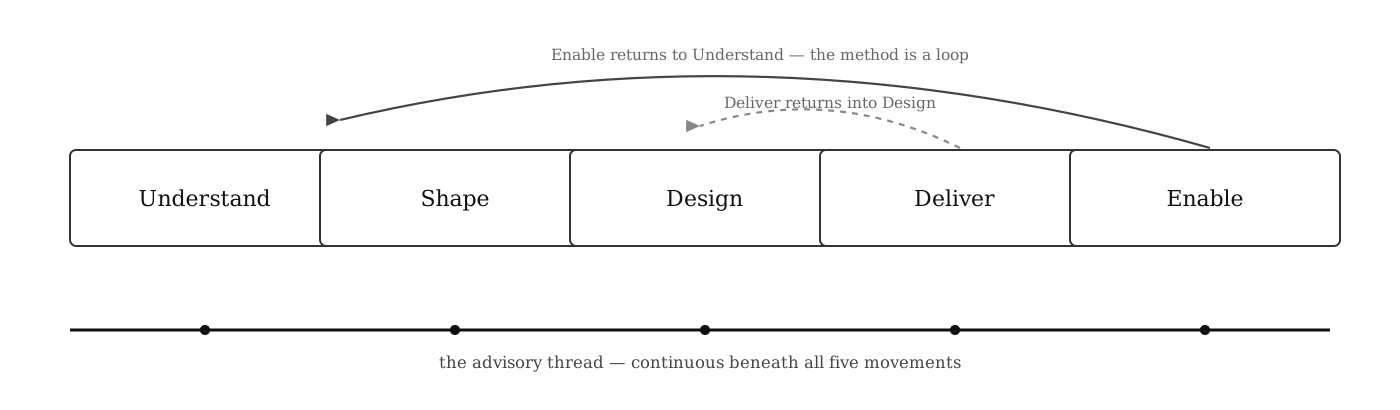
Understand, Shape, Design, Deliver and Enable are iterative. Enable returns to Understand, and Deliver returns into Design. Advisory continues beneath all five movements. Open full-size diagram
  1. Understand

    Discover what actually exists, why it behaves as it does and what conditions shape it.

  2. Shape

    Turn understanding into intent, choices and a definition of what success must mean.

  3. Design

    Connect the organisational, operational and technical elements required to create the capability.

  4. Deliver

    Build and change in a way that proves the capability incrementally rather than merely completing outputs.

  5. Enable

    Transfer ownership, establish operation, measure performance and create the means for the capability to continue evolving.

Advisory Thread

Advisory runs continuously through all five movements.

The movements are not a waterfall. An engagement can enter where reality requires, iterate backwards and forwards, and continue learning through operation.

Enterprise design

From strategic outcome to operating reality.

Capability design begins above technology.

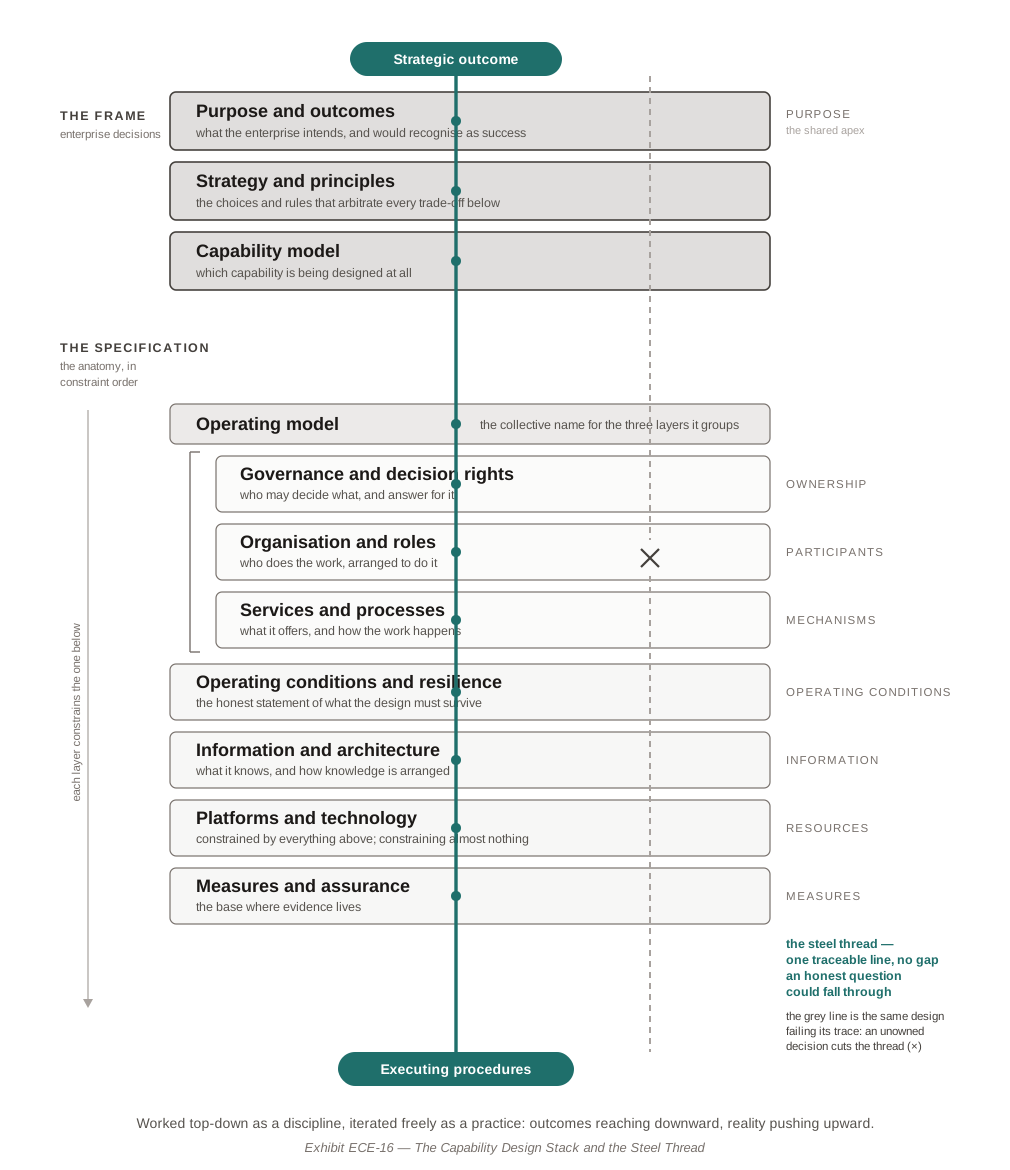
Purpose and outcomes establish why the capability exists. Strategy and principles establish the choices that guide it. The capability model defines what is being designed.

From there, the design moves through operating model, governance, organisation, services, operating conditions, information and architecture, platforms and technology, and measures and assurance.

A continuous thread of traceability connects those decisions so that implementation can always be related back to the outcome the enterprise intends to achieve.

The Capability Design Stack and the Steel Thread
The design runs from purpose and outcomes through strategy, capability model, operating model, governance, organisation, services, operating conditions, information, technology and assurance. The steel thread connects each decision back to the strategic outcome. An unowned decision breaks that traceability. Open full-size diagram

Outcomes

Start with the outcome.

A capability exists to create a changed condition, not merely to produce artefacts.

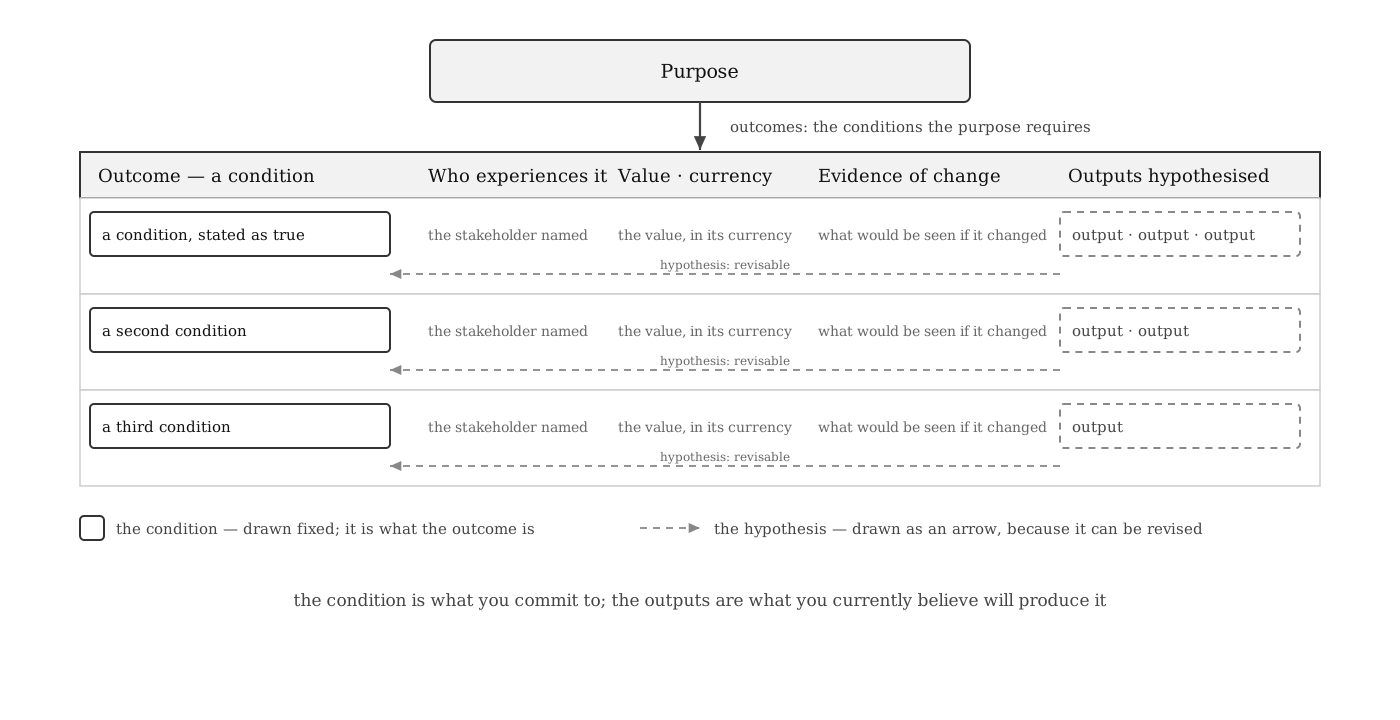
The outcome model connects the intended change, the stakeholders who experience it, the evidence that shows whether it happened and the outputs believed to contribute to it.

Outputs can change as understanding improves. The intended outcome remains the anchor.

The outcome model
Purpose defines the required conditions. Each outcome identifies who experiences it, its value, evidence of change and the outputs hypothesised to contribute. Outcomes anchor the design; output hypotheses can be revised. Open full-size diagram

Enterprise Capability Engineering

The books

The two volumes develop Enterprise Capability Engineering from its foundations and method through to detailed enterprise design and practice.

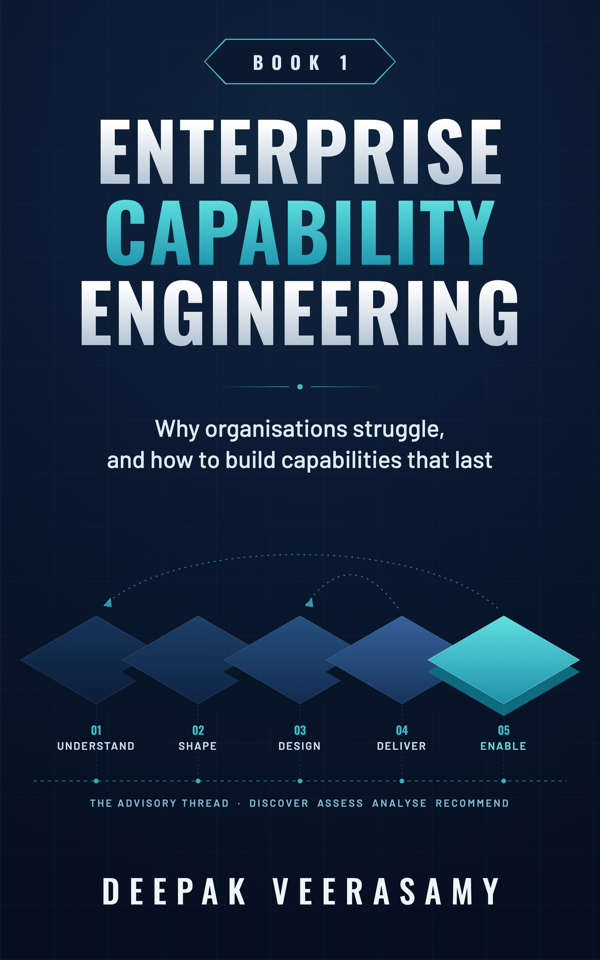
Enterprise Capability Engineering, Book One, by Deepak Veerasamy

Book One · Forthcoming

Enterprise Capability Engineering

Why organisations struggle, and how to build capabilities that last

Book One examines why organisations can deliver successfully without becoming more capable, establishes the foundations of enterprise capability, and introduces the Enterprise Capability Engineering method.
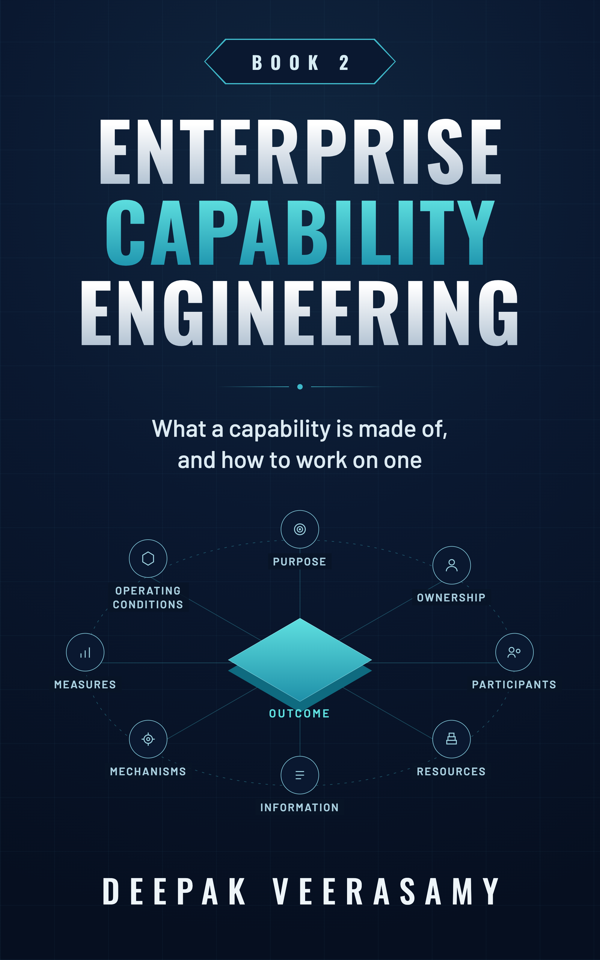
Enterprise Capability Engineering, Book Two, by Deepak Veerasamy

Book Two · Forthcoming

Enterprise Capability Engineering

What a capability is made of, and how to work on one

Book Two takes the discipline into enterprise design and practice, working through the decisions required to design, build, transform and sustain capability.

DGC Group

Begin where you need us.

Tell us what you're working towards. We'll explore where DGC can help.

Start with a conversation